No Horn? No Problem: 5 Mental Practice Techniques
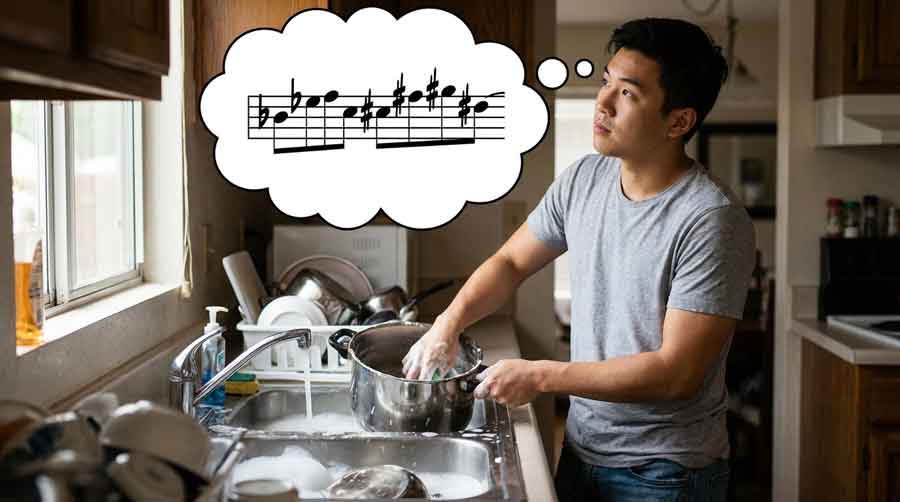
Whether you’re a big time professional sax monster, or a part time hobbyist on the horn, chances are that you often find yourself hard-pressed to find as much practice time as you would like to. Real life duties such as work, kids, errands, chores, mayonnaise spills (don’t ask), and even unchallenging gigs can keep us from enjoying regular blocks of time that we can devote to our musical development.
Sax legend David Liebman's new course is designed to be the ONLY course on saxophone sound you'll ever need. This streaming video series features the most effective sound production techniques and concepts he's come across over decades spent helping saxophonists to find their biggest, richest, and most compelling voice on the horn.
David takes the same methods that were taught to fellow legends (Michael Brecker, Eddie Daniels, and other giants), and expands on them so that players at any level (including those who don't have a ton of time to practice each week) can start building the kind of sound that truly turns heads.

SaxTone.com
The New "Sax Sound Bible"

However, there is a way that we can practice when we’re away from the horn. In one of BSWE’s earliest interview articles, a super info-crammed Q and A with the amazing Loren Stillman, Loren mentioned that he spent a lot of time thinking about improvisation and sound while he was away from the saxophone – but really, you could mentally practice any aspect of your playing while away from the horn. So how would that work? Here are some ideas:
- Imagine yourself practicing your overtones. Savor the feeling of the entire instrument vibrating through your fingers as you generate that thick wall of sound. Now imagine creating a wall of sound just as big and bold by playing the normal fingerings. How would you be manipulating the muscles in your mouth and diaphragm to get that bigger sound? See? You’re sounding better already!
- As opposed to listening to a recording, use your musical memory to “listen” to solos by your favorite saxophonists. Notice the color and general character of their tone. Is it bright, dark, piping, blaring, or somewhere else in the sonic spectrum? To get even more detail, maybe even imagine what they would sound like playing long tones (which would probably sound amazing, no?).
- Listening with the same level of detail, now imagine the sound that you are going for as though you were listening to a crystal-clear recording of yourself. Hear yourself playing a familiar tune. The point here is to create an incredibly vivd sonic image of what you’d like your tone to sound like. You can check out an article by the great Randy Hunter on the topic of mental sonic imagery in a very clear and concise manner.
- Clearly hear in your head, or better yet, sing aloud the various exercises and patterns you’re currently working on. Start doing this slowly, as the trick here is to hear the notes as though they were ten feet tall. I almost all cases, if you can sing it, you can play it. Imagine yourself feeling incredibly relaxed as you move gracefully and confidently from note to note.
- Just as you can mentally practice your exercises and patterns, you can improve your improv by imagining improvised solos in exact note-for-note detail. Another great thing to do is to put on a jazz play-along while you’re driving and sing a solo over the changes. If you want to get really advanced, put on some harmonically-dense classical music such as Debussy or Stravinsky and sing over with that!
From here you can create an infinite number of your own mental practice routines. The point is, the more you think about music, the more engrained in your mind and your ears that music will become, and the more comfortable you’ll be on your instrument when it actually comes time to play. I mean, what else are you going to think about (besides donuts, of course)?