Steve Wilson on Practice, Purpose, and Personal Sound
Introduction
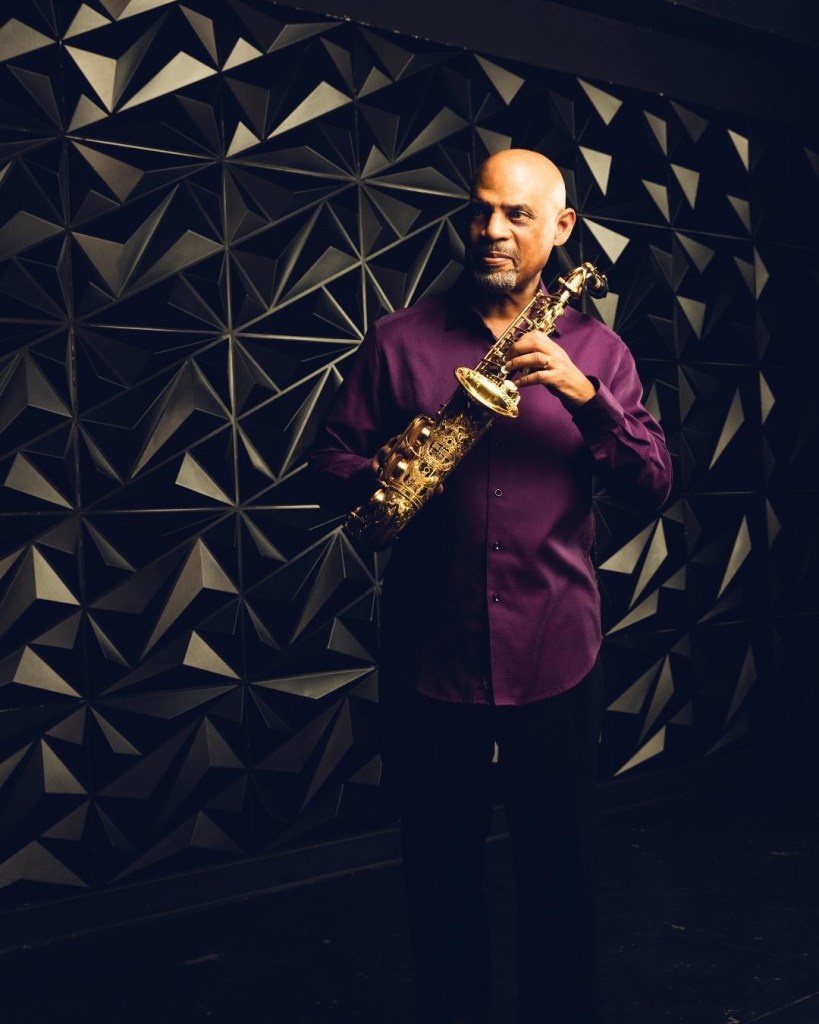
Steve Wilson is an accomplished multi-instrumentalist that if you are into playing or listening to the alto saxophone, you have definitely heard of. With Steve celebrating the release of his latest album “ENDURING SONANCE“ out on Smoke Session Records on May 1, 2026 I had the opportunity to sit down with him to learn more about his journey, who he played with, and what projects he is currently working on. For those of you who need a quick crash course on Steve, check out the condensed bio below:
Sax legend David Liebman's new course is designed to be the ONLY course on saxophone sound you'll ever need. This streaming video series features the most effective sound production techniques and concepts he's come across over decades spent helping saxophonists to find their biggest, richest, and most compelling voice on the horn.
David takes the same methods that were taught to fellow legends (Michael Brecker, Eddie Daniels, and other giants), and expands on them so that players at any level (including those who don't have a ton of time to practice each week) can start building the kind of sound that truly turns heads.

SaxTone.com
The New "Sax Sound Bible"

Biography
- Growing up in Hampton, Virginia, Steve played the saxophone, oboe, and drums in school bands while also performing in various R&B/funk bands throughout his teens.
- After playing with singer Stephanie Mills, Steve decided to study music at at Virginia Commonwealth University in Richmond
- While Steve was at VCU, he studied with: “Jimmy and Percy Heath, Jon Hendricks, Jaki Byard, John Hicks, Frank Foster and Ellis Marsalis.”
- During his time in college, Steve was being called for studio recording work and as sideman for touring shows such as The Four Tops, Sophisticated Ladies and O.T.B (Out of the Blue) sextet.
- Throughout the years, Steve brought his distinctive sound to more than 100 recordings led by such celebrated and wide-ranging artists as Chick Corea, George Duke, Michael Brecker, Dave Holland, Dianne Reeves, Bill Bruford, Gerald Wilson, Maria Schneider, Joe Henderson, Charlie Byrd, Billy Childs, Karrin Allyson, Don Byron, Bill Stewart, James Williams, and Mulgrew Miller among many others.
- Wilson has seven recordings under his own name thus far, leading and collaborating with such stellar musicians as Lewis Nash, Carl Allen, Steve Nelson, Cyrus Chestnut, Greg Hutchinson, Dennis Irwin, James Genus, Larry Grenadier, Ray Drummond, Ben Riley, and Nicholas Payton.
- In 2003 Wilson’s recording Soulful Song was released on MAX JAZZ launching the label’s Horn Series.
- In 2009 Wilson was a member of the Blue Note 7, an all-star septet assembled to celebrate the 70th anniversary of Blue Note Records. The project culminated in a successful 50-city tour of the U.S. and their recording Mosaic.
- In 2009 and 2010 Wilson made his orchestral debut performing Heitor Villa Lobos’ Fantasia for Soprano Saxophone and Chamber Orchestra with the Vermont Mozart Festival Orchestra.
- In February 2011 Wilson celebrated his 50th birthday with a six-night engagement, leading six different bands at Jazz Standard, NYC’s premiere jazz club. The all-star line-up included Mulgrew Miller, Bruce Barth, Karrin Allyson, Lewis Nash, Jeff “Tain” Watts, Carla Cook, Geoffrey Keezer, Christian McBride, Linda Oh, Ed Howard, Adam Cruz, Diane Monroe, Joyce Hammann, Nardo Poy and Troy Stuart.
- Steve’s been a long time educator and is currently an Associate Professor of Music at City College of New York, and on faculty at the Juilliard School. He has been artist-in-residence and/or guest artist at University of Oregon, University of Maryland-College Park, University of North Carolina at Chapel Hill, University of Delaware, Lemoyne College, North Carolina Central University, Bowling Green University, Lafayette College, University of Northern Colorado, SUNY New Paltz, Florida State University, California State University at Stanislaus, University of Manitoba, Hamilton College, Old Dominion University, Virginia Commonwealth University, and for CITYFOLK in Dayton, Ohio.
Interview
ZS: Who or what introduced you to the saxophone?
SW: Like most kids, I wanted to be a drummer first but my father had a small but eclectic record collection. Some of the first records I remember hearing were Swiss Movement by Eddie Harris and Les McCann, and Country Preacher by Cannonball Adderley. When I was 10 years old, my father took me to a jazz festival in my hometown of Hampton, Virginia, and I saw Eddie Harris, Les McCann, Cannonball, and Rahsaan Roland Kirk and this really drew me into the music.
A couple of years later, one of my best friends in the neighborhood, who was a couple of years older than me, was playing saxophone. He’d come by my house and let me blow into the saxophone while he fingered the notes which was great. For me, seeing these live musicians and hearing the records made me think, “that’s what I want to do.” I started playing saxophone in junior high; which was 7th grade. I learned from the school program and was mainly self-taught and practicing on my own until I got to college. I practiced and received tips from friends who were a couple of years older, listened, transcribed, and we had garage bands as teenagers. We’d learned tunes from the radio and played school dances and Elks Lodges. The minute I started formal training, I knew music was my calling. The only other thing I had any interest in was possibly being a social worker. But, I was pretty serious about music from the beginning, and certainly by the time I was 16, I knew I was going to pursue it as a profession. I’d already gotten a taste of that playing at dances and playing for people and thought, “this is great, being able to share music with people.” I was listening to everyone from the Brecker Brothers to Hank Crawford, David Sanborn, Grover Washington, Andrew Woolfolk with Earth, Wind & Fire, and Ronnie Laws. Then I got into Charlie Parker and Coltrane in my later teens and it just kept going.
When I was deciding on going to college, I actually had my eyes on going to Berklee but Virginia Commonwealth University (VCU), which was just starting their program, came to my high school. This was actually the year after I graduated, because the year after graduation I went on the road playing with a horn band touring the Mid-Atlantic states. My high school band director said, “Hey, you should come hear this great big band from VCU.” They were playing Thad Jones and Duke Ellington, and I thought, now that’s what I want to do.
I wasn’t familiar with the program at VCU but it was really serious. The great director of jazz studies, Doug Richards, who continues to be a dear friend and mentor, was there. There were two saxophone teachers: the classical teacher was Frank Tuckweiler, who had studied with Eugene Rousseau, and Skip Gales, the jazz saxophone teacher, who was a great player working around Richmond. I got lessons from both of them, but also learned a lot from the older guys playing in the big band who’d been around town. I’d go to their apartments and listen to records. It was a great time.
After graduating, I moved to New York in 1987. I had joined a band called Out of the Blue (OTB), which was a “young lions” band on Blue Note Records. I got that gig through Kenny Garrett. I’d met Kenny some years before, and he had just left the band to join Miles Davis. He called and said, “I’m leaving the band, would you be interested?” It worked out, and that allowed me to move to New York and I just kept going from there.
ZS: Who are your saxophone influences and have they changed over time?
SW: They’ve all stayed with me and my influences keep evolving. It started with Cannonball, Rahsaan, and Eddie Harris. As I started transcribing, I got into Dexter Gordon, Sonny Stitt, then Joe Henderson a little later. The real turnaround came during school. My sophomore year, I became the lead alto in the big band, and we were playing tons of Duke Ellington. That led me to Johnny Hodges, who is still my favorite saxophonist. Hodges is still kind of my center in terms of sound concept on alto. From there, Phil Woods, Gary Bartz (who I call my spirit master, because his musical direction encompasses everything), Paul Desmond, Ornette Coleman, and Jackie McLean. I really enjoyed Eddie Harris who was an unsung genius and innovator, doing amazing altissimo on tenor back in the ’60s, playing melodically up there before it became a thing 30 years later.
ZS: As you progressed on the saxophone and developed your own sound, what was your process and when did you realize that you found your voice?
SW: On alto it has been a real journey because I wanted to be a tenor player up until my sophomore year of college where I got the lead alto chair. Before then it was mainly tenor players who were my influences. Getting the lead alto chair I really had to develop a lead alto sound as well as an alto sound that would be identifiable in other settings. For me, I feel like I have not found my voice on alto until very recently within the last ten years. Oddly enough when I was twenty, I picked up the soprano and felt that the soprano was more my natural voice. Alto I have had to work a lot harder as I find the alto is very peculiar in terms of range, intonation, control, pitch and than having to go through the extensive catalog of great altoists and getting through that language, sound, bebop language etc. Soprano was a different path for me because I did not form my voice through bebop. It’s been quite a journey on alto and has not been easy because there are so many great alto players and then trying to find one’s own voice that is you. Emulation is great up to a point but it should be a springboard to get to what you’re hearing, feeling, and drawing from your own life experiences.
The other component for me was that I’ve always played different kinds of music throughout my entire career from classical wind band during the day, funk and R&B on weekends, jazz, rockabilly, fusion, and jingles. All of that fed into me finding my own sound for different situations. Ultimately, you have to find yourself without trying to copy somebody. It’s been a longer process for me to process all the different sounds and the different syntax each situation requires. I equate it to this: we go through our lives listening to all these amazing players we admire and love. We emulate them. Through that process, we’re taking threads from all of these different fabrics, and consciously or unconsciously, we’re weaving our own unique fabric. Early recordings of Wayne Shorter sounded like Lester Young or Warne Marsh. Early Coltrane sounded like Dexter Gordon. We all go through that process.
ZS: What is your approach to teaching and practicing? How has it evolved?
SW: I came to full-time teaching around thirty. My first full time teaching gig was at William Paterson University. I got the call from Rufus Reid to teach saxophone lessons and I had to follow Joe Lovano, who’d been teaching there a few years and I thought “ok, now what am I going to do?” That forced me to really start thinking consciously about my process and organizing it. It helped me develop not just my teaching, but my own playing.
I try to work with every student individually. I don’t have a cookie-cutter, one-method approach, because everyone’s at a different stage of development. I take what I call a holistic approach where we will do some technical work, some improv, some etudes but it depends on the students level of development. I have a unique prescription for every student. Honestly, I don’t even like to think of myself as a teacher but more a coach. I’m interested in where the student is as a young artist and where they’re trying to go. I don’t have a one-size-fits-all approach as I find this can be a lazy way of teaching. It’s a missed opportunity to tap into the gifts the student might have. Everyone’s on a different path, and that’s the way the universe is laid out.
The most beautiful thing I’ve experienced in teaching is when a student takes a concept I give them, goes and experiments with it, and comes back having developed it into something else. They end up showing me something new. You plant the seed and they find their own language.
ZS: Sideman vs. bandleader — what are the key differences in how you approach each, and do you have a preference?
SW: As a sideman, I imagine it like being an actor. I’m working with the leader and composer, in most cases it’s the same person now, and I’m trying to find out what the music is about, what the story is, what the vibe is. That’s my guide. It’s not about just playing the way I play. If I tap into where they’re coming from as a composer and leader, now there’s something for me to discover. I’m trying to find the character of the music, tap into it, bring myself into that character. I give deference to the leader and the music first and then discover from there.
As a bandleader, I look for musicians who are rooted and have a historical perspective on the music but aren’t stuck in one lane. I want players with individual sounds who can help me find something new, take me out of my comfort zone, and keep me in the moment. It’s about trust and when you have that trust, the doors open for you to discover something every night. I learned that from Buster Williams, Dave Holland, and Chick Corea. Their mission was to discover something different every time, not just rest on what they know. With those guys, you couldn’t play the same stuff every night. They wouldn’t let you.
ZS: If you hadn’t pursued music full-time, what other career might you have followed?
SW: It really would have been a social worker. But in a way, this artistry, this life of being an artist, is social work. We’re serving humanity. People gravitate toward the sounds that come through us and it uplifts them. Music has a lot of power. As a teacher, you’re not just dealing with musicians, you’re dealing with young minds and people searching for an identity artistically and otherwise. You’re trying to be a guidepost and helping them find their own ways.
ZS: What projects are you currently working on?
SW: I have an album, Enduring Sonance, coming out on May 1st 2026. We have a release engagement at Smoke Jazz Club in New York the last week of April. I will also have some other dates coming from this project. I’m on sabbatical this year from City College, where I’ve been teaching for 13 years. The sabbatical centers on a concerto I commissioned Billy Childs to write for me with a Symphonic Wind Band which has been a dream I’ve had for many years. I asked Billy about 6 or 7 years ago, knowing it would take him 4 or 5 years to get to it since he’s in such high demand. The piece finished at the beginning of last year, and I’ve performed it at several universities that were part of the commissioning consortium. I’ll finish that cycle in the spring at VCU where I went to school. I’ll also be playing a duo with Lewis Nash at the Umbria Winterfest in Italy. We’ve had this duo for over 20 years, and it’s one of the most fun things I’ve ever had the privilege of doing. I’m continuing my sideman work with Christian McBride’s quintet (Inside Straight) and big band, Maria Schneider big band I’ve been with for over 20 years and Buster Williams.
ZS: What are your thoughts on equipment? How important is equipment and how has your setup evolved?
SW: I’ve been a Yamaha artist for a little over 10 years. I play the 82Z II custom which was further customized by the chief tech in New York, Tomoji Hirokata. I still have my Mark VI which I play occasionally and the Mark VI is still the gold standard which many horns are designed around. I love my Yamaha as it gives me a lot more flexibility and a wider color palette, and with Tomoji’s modifications, I now have that core sound I love from the Mark VI built in.
My mouthpiece on alto is the original V16 before they put the gold band on it. That mouthpiece is at least 25 years old, and I have some of the new models but have been looking for the vintage models which are impossible to find. I’ve been consistently playing it for about 10 years. I use Vandoren Java Red 2.5 reeds which I’ll clip them a little but I try not to fuss with them too much. For the ligature, I use the leather Vandoren, which I’ve been playing forever. I’d recommend it as an alternative to save money on reeds as the interchangeable plates (hard leather, soft leather, metal) help a lot in different playing situations.
My case is the BAM cabine case for flying as it’s compact and fits in all overhead bins. I also have a Nonaka Sky case (a Japanese-made trapezoid/beveled design) as a double case for my traveling soprano, a Yamaha 875 with detachable necks. It fits in every overhead configuration. I’ve had that case for over 10 years and it’s been a godsend. For neckstraps, I have the Vandoren strap, but lately I’ve been using a Just Joe’s strap. I have the wider bar version which really helps diffuse the pressure on the neck.
For soprano mouthpieces, I rotate between three: the classical Vandoren Optimum (4 facing), the Vanoren V5 s25, and an older Meyer from 1986 before they changed the blanks. That was the mouthpiece I originally bought in 1986, and it’s wonderful.
Equipment
Alto:
- Saxophone: Yamaha 82zii Custom Saxophone (customized further by Tomoji Hirakata)
- Ligature: Vandoren Leather Ligature
- Reed: Vandoren Java Red 2.5 strength
- Mouthpiece: Original V16 A6 without band
- Case: Bam Cabine and Nonaka Sky Case (alto + soprano case)
- Neckstrap: Vandoren Strap or Just Joe’s Gel Strap with wider bar
Soprano
- Saxophone: Yamaha 875
- Ligature: Vandoren Leather Ligature
- Reed: Vandoren V16 3 strength
- Mouthpiece: Vandoren Optimum SL4, Vandoren V5 S25, older Meyer from 1986 before they changed the blanks
Connect: